SEO Migration: How to relaunch your site without losing organic traffic
February 27, 2026
Launching a new website or migrating to a new CMS can become a serious problem when SEO is treated as an afterthought. The pattern is common: the new site goes live, but the brand loses Google rankings, strategic pages disappear, and errors start appearing. The focus goes to design and technology, but SEO migration, which protects years of accumulated authority, is neglected.
That happens because, far from being secondary, SEO planning and SEO migration must start before the first commit. This includes auditing what already performs well, building a complete URL inventory, and mapping 301 redirects correctly. This work is what prevents valuable pages from disappearing from search results on go-live day.
In this guide, you’ll learn how to structure the migration into clear stages, with checklists and technical decisions that prevent rework. You’ll also understand when it may be time to seek specialized support. The idea is simple: plan, execute, and monitor with control, not improvisation.
Talk about SEO migration with a specialist
How SEO Migration works and which ranking factors must be preserved
To understand SEO migration, it’s important to return to the fundamentals. SEO is the set of practices that help Google crawl, interpret, index, and rank a website based on relevance, authority, and user experience. It does not depend on a single factor. It relies on a combination of technical and semantic signals that, together, sustain rankings.
When a site goes through a migration, whether it’s a CMS change, domain change, architectural shift, or URL restructuring, those signals may change. Google reacts to structural changes as a new scenario that must be re-evaluated. That’s why migration is not just technical. It is a digital reputation transfer operation.
In practice, SEO migration functions as a process of preserving and revalidating signals. What previously communicated authority and relevance must continue to exist in the new version of the site. If a page ranked because it had backlinks, a solid heading structure, fast loading, and consistent UX, those elements cannot disappear in the transition.
Most sensitive ranking factors during migration
- URL structure and proper redirects to maintain accumulated authority.
- Information architecture and internal linking that help Google understand hierarchy and context.
- Content and semantics, including titles, headings, and search intent alignment.
- Performance and Core Web Vitals, especially during front-end changes.
- Correct indexation setup, including canonical tags, sitemap, and robots.txt consistency.
- Existing backlinks that cannot point to removed or broken URLs.
When these factors are ignored, search engines interpret the change as a loss of relevance or discontinuity. The result is ranking drops and a complete reprocessing of the website in Google’s index.
According to Micaela L. Rossetti, Head of Marketing at Dexa and a specialist in digital ecosystems, the absence of SEO directives during migrations is a critical mistake. She points out that organic traffic drops of up to 80% are not uncommon in negligent projects, turning a website launch into a performance crisis. “The cost of recovery is high, and Google’s response time is slow. That’s why preventing authority loss is always more efficient than trying to recover it,” she states.
On the other hand, migration can also represent a strategic opportunity. It is the right moment to fix old structural bottlenecks, improve architecture, optimize content, and reinforce technical foundations. The difference between risk and growth lies in how the process is conducted.
How to perform an SEO Migration without losing Google rankings
A successful SEO migration happens when the team understands the impact of each decision before executing. That’s why it makes more sense to treat the migration as a continuous, prioritized flow with clear dependencies between stages, rather than as a fragmented set of tasks.
In practice, migrating well means knowing what comes first, what depends on what, and what cannot fail. Below, the SEO migration is organized into logical stages, respecting a priority line that reduces risk and simplifies validation.
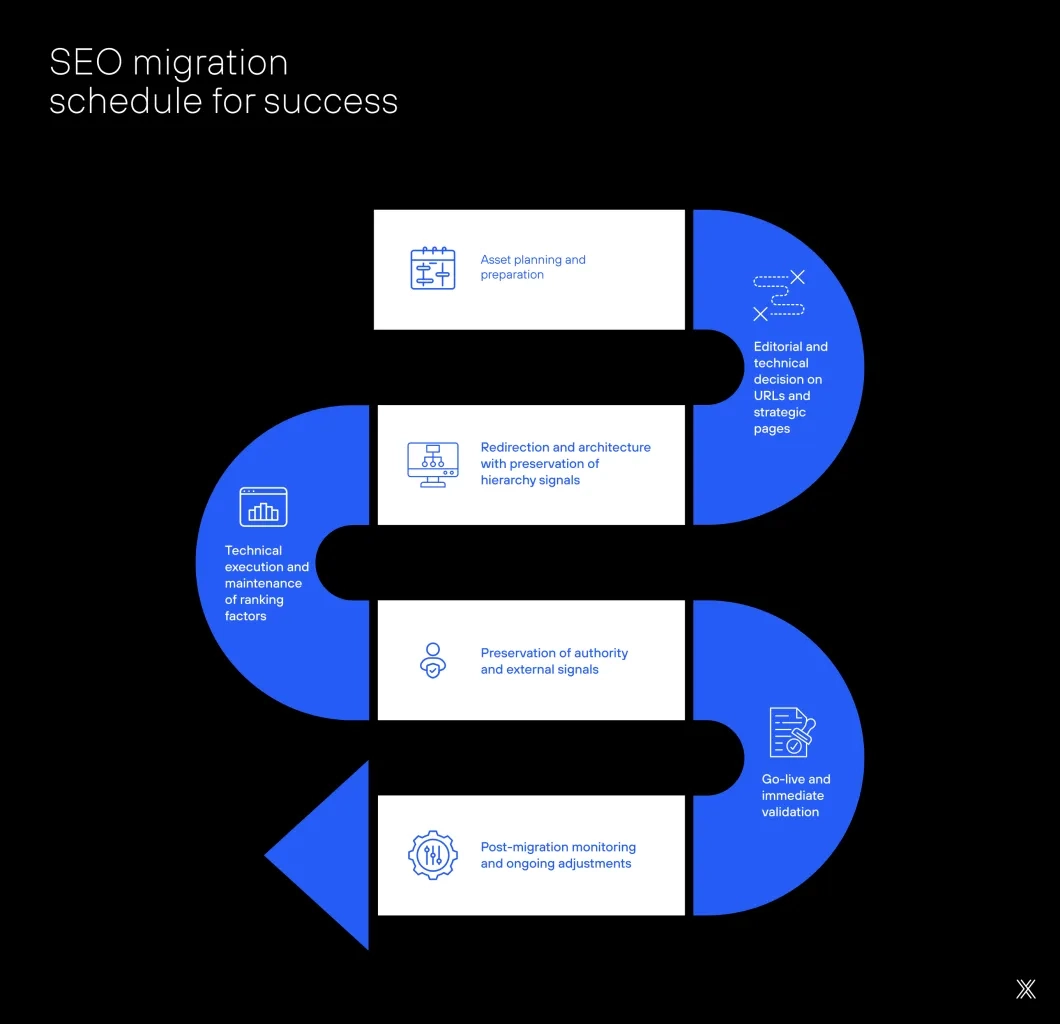
1. Risk assessment and scope definition
Every migration starts with clarity about what will change. Google does not react the same way to a simple CMS change that keeps URLs intact versus a complete overhaul of the domain, architecture, and front-end. The first step is to correctly frame the migration type and the level of SEO exposure.
This moment defines effort, timeline, and technical depth. When scope is unclear, SEO migration is usually underestimated and treated as a minor adjustment, which increases the risk of traffic loss and corrective delays post go-live.
Checklist: scope and risk:
- Define the migration type (CMS change, URL restructuring, domain change, architectural redesign, headless implementation).
- Map all changes impacting URLs, crawling, and indexation.
- Evaluate the importance of organic traffic to the business and define monitored KPIs.
- Classify the migration’s risk level and prioritize tasks accordingly.
- Align responsibilities between SEO, product, and engineering teams before project kickoff.
2. Asset diagnosis: understanding what already performs
Before moving anything, it’s essential to understand the current site as an acquisition asset. In SEO migration, you are not transferring pages only. You are transferring search behavior, relevance history, and authority accumulated over time.
This stage combines strategic analysis and technical reading. The goal is to identify which pages sustain traffic, which URLs concentrate backlinks, and which structures help Google understand the site today. That’s what defines what must be preserved at all costs and what should be prioritized in monitoring.
Checklist: current site diagnosis
Identify the pages with the highest organic traffic.
Map the pages that convert the most from organic traffic.
Document content clusters and strategic keywords.
Identify URLs that receive relevant backlinks.
Record current performance metrics and Core Web Vitals.
Document the current template structure, headings, and metadata.
3. Editorial and technical decisions: URL and content destinations
With the diagnosis in hand, the SEO migration enters a decisive phase: defining the destination of each relevant URL. Here, the question is not “what are we deleting,” but which page inherits that intent after migration.
This is a convergence point between SEO, content, and engineering. Some pages stay the same, others need updates, and in many cases consolidation is the best decision. The mistake is removing without planning or consolidating without semantic criteria.
Checklist: per-URL decisions
Classify all URLs as keep, update, consolidate, or remove.
Identify strategic content that cannot be lost in the transition.
Plan 301 redirects for all removed or changed URLs.
Validate the editorial and technical impacts of each decision before implementation.
4. Redirects and architecture: preserving signals and hierarchy
Redirects are the primary mechanism for preserving SEO signals. They do more than prevent 404 errors. They transfer authority, context, and relevance from old URLs to new ones.
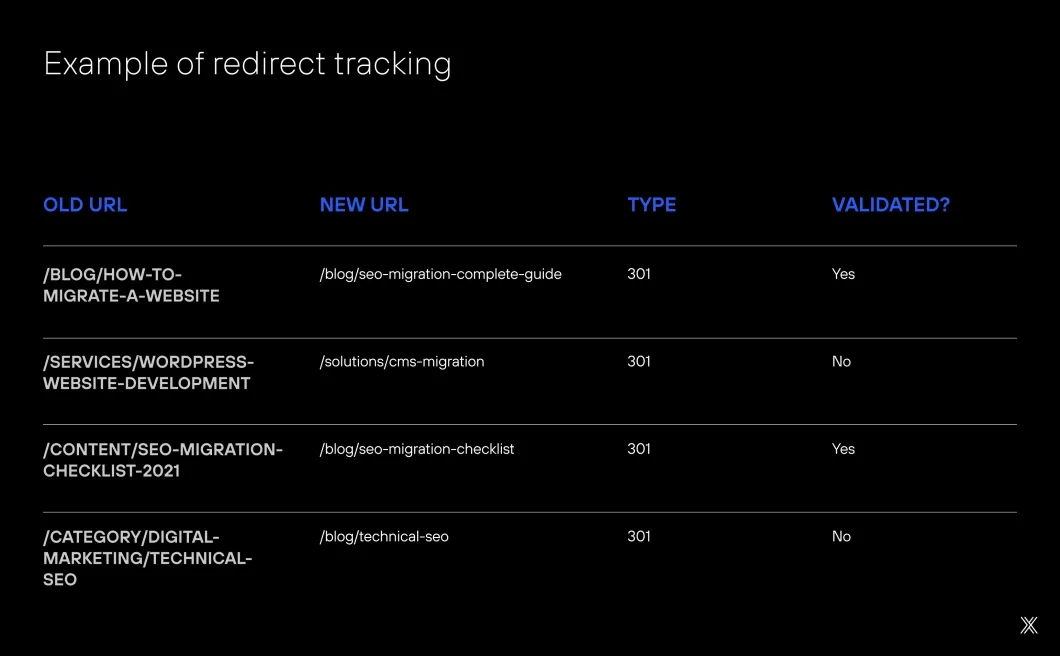
At the same time, the new architecture must remain coherent. Category structure, navigation depth, and internal linking patterns directly influence the stabilization period after migration.
Checklist: redirects and architecture
Map old URLs to new URLs with a clear logic of thematic and structural equivalence,
Prioritize 1:1 redirects whenever possible, preserving context and intent.
Avoid generic redirects to the homepage or unrelated pages.
Validate the new hierarchy of categories and taxonomies before go-live.
Review internal links and breadcrumbs to maintain structural coherence.
Control pagination, filters, and infinite URL variants to prevent unnecessary indexation.
5. Technical execution and preservation of ranking factors
During execution, the greatest risk is losing signals without noticing. Different CMS platforms treat slugs, headings, canonical tags, metadata, and structured data differently. These differences can generate silent losses in an SEO migration if not properly validated.
The objective at this stage is not to re-optimize everything. It is to guarantee functional parity. The new website must deliver to search engines the same essential signals that previously sustained its performance, without creating duplication or inconsistencies.
- Preserve or correctly migrate title tags and meta descriptions.
- Maintain heading hierarchy according to the original semantic structure.
- Ensure final URLs are consistent and not auto-generated incorrectly by the new CMS.
- Validate canonical tags and hreflang configurations before launch.
- Avoid duplicate content generation during transition.
- Completely block the staging environment from indexation.
6. Preservation of authority and external signals (off-page)
In SEO migration, off-page SEO acts as a layer of historical continuity. Links pointing to old URLs must still make sense after the change, or accumulated authority is lost.
This stage often involves SEO, marketing, and sometimes PR or branding.
Checklist: off-page SEO
Prioritize URLs with relevant backlinks in the mapping.
Validate redirects for the highest authority pages before go-live.
Avoid consolidating URLs without clear semantic equivalence.
Manually update strategic backlinks whenever possible.
Monitor broken backlinks and redirect errors after launch.
7. Go-Live and Immediate Validation
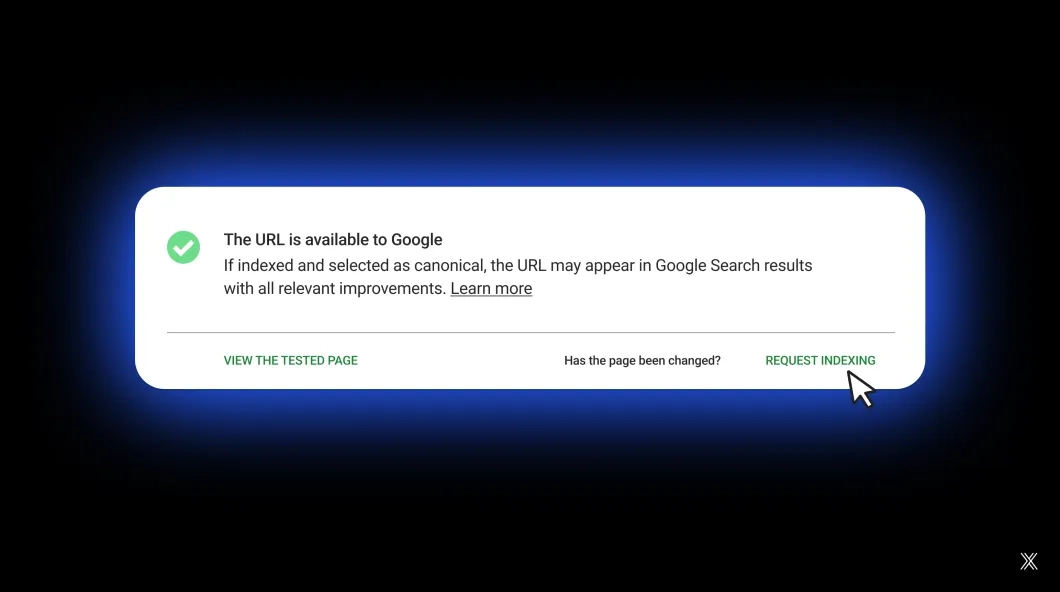
Launch is the most sensitive moment in an SEO migration. It’s when Google begins crawling the new site and consolidating signals. The faster you guide this process, the shorter the uncertainty period. This phase demands coordinated action and quick validations, especially in the first days.
Checklist: go-live actions
Activate all redirects at the exact moment of go-live.
Update and submit the new sitemap in Google Search Console.
Request indexing for the most critical and strategic pages.
Use the Change of Address tool when there is a domain change.
Immediately check coverage and crawl reports after launch.
8. Post-migration monitoring and continuous optimization
Finally, SEO migration must be monitored. Initial volatility is expected, but errors that are not corrected quickly become consolidated losses.
Monitoring should evolve over time: first technical, then analytical. That’s what ensures recovery and creates room for growth after the migration.
Checklist: post-migration
Daily monitoring of crawl and indexation errors;
Checking for broken redirects or redirect chains;
Tracking impressions and clicks in Search Console;
Ranking analysis by page groups;
Content and architecture adjustments based on real behavior;
Strategic review after stabilization.
Understand how to apply this to your project
SEO metrics that truly matter during migration
Migrating a site without tracking metrics is like swapping an airplane engine mid-flight without instruments. It might work, but the risk is high. In SEO, migration is a critical period because any technical change affects crawling, indexation, rankings, and traffic almost in real time.
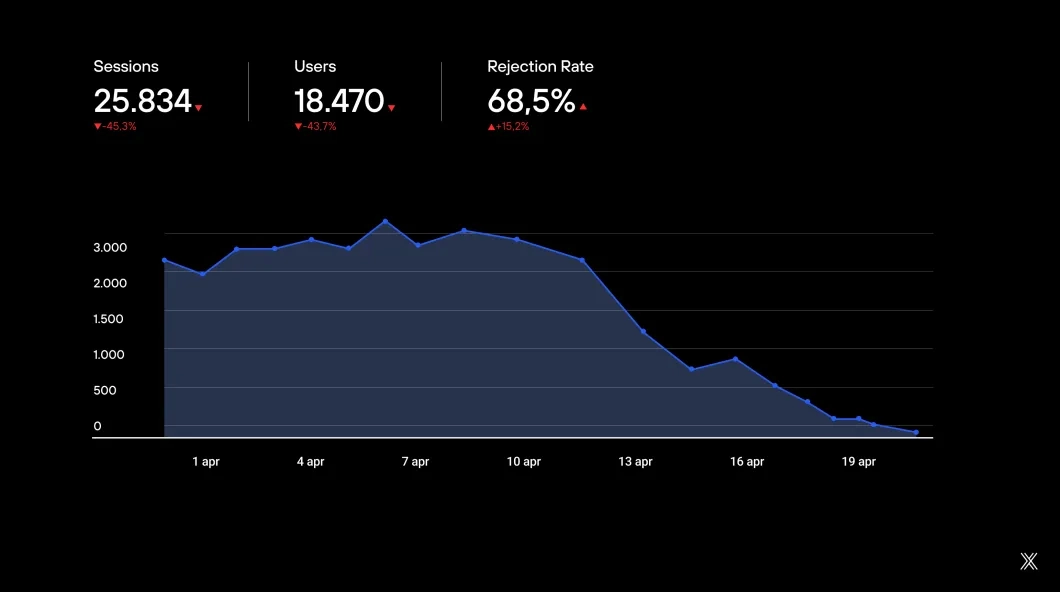
Tracking the right metrics helps you quickly spot abnormal drops, fix issues before they become chronic, and ensure long-built authority is not lost. Below are the metrics that truly matter, and why you should monitor them closely.
Organic traffic
This is the most visible thermometer of the migration. Fluctuations are normal, but abrupt drops indicate serious problems, such as redirect failures, pages not indexed, or technical blocks. Daily monitoring helps you react fast before the impact becomes permanent.
Index coverage
This confirms whether Google can access and index the new site properly. Unjustified exclusions, crawl errors, or valid URLs disappearing are classic signals of a poorly executed migration.
Crawl errors (4xx and 5xx)
Broken links, missing pages, or server errors directly affect user experience and how Google evaluates the site. During migration, these errors often appear at scale if redirects were not mapped properly.
Redirects (301)
More important than having redirects is having the right redirects. Long chains, redirects to irrelevant pages, or missing 301s for strategic URLs dilute authority and hurt historical rankings.
Strategic keyword positions
Tracking priority keywords helps you understand whether the migration impact is concentrated in critical pages or spread across the site. Localized drops often point to specific URL, template, or content issues.
Organic CTR
Changes in titles, metas, or structure can reduce click-through rate even when rankings remain stable. Monitoring CTR helps identify post-migration refinements without relying only on raw traffic.
Load time and Core Web Vitals
Migrations often change CMS, infrastructure, or front-end. If performance worsens, SEO impact follows. Load and visual stability metrics should be monitored from the first deployment.
Internal links and navigation depth
A new architecture can push important pages deeper or make them less accessible. That affects crawling, relevance, and indexation. Comparing internal linking before and after migration prevents this silent error.
Organic-driven conversions
SEO is not just traffic. If conversions drop even with stable visits, the issue may be UX, broken journeys, or structural changes affecting user intent.
Você também pode se interessar:
7 essential technical requirements in Website Company Development
Discover the main Web Design Services and learn how to choose the right partner
How Does a Website Audit Work and What Services Does It Include?
Conversion Rate Optimization: How to turn visitors into customers
Common SEO Migration mistakes and how to avoid them
Most SEO migration issues come from operational shortcuts. They are decisions made to save time that end up costing traffic, authority, and months of recovery. Understanding these mistakes helps you avoid them and build a more realistic migration.
Below are the most recurring SEO migration problems, their direct impact on organic performance, and how to handle them correctly.
Quick Summary of Errors, Impacts, and Fixes
| Technical error type | What happens in practice | Direct impact on SEO migration | How to prevent it |
|---|---|---|---|
| Misconfigured redirects | Old URLs do not redirect or point to generic pages | Loss of authority, ranking drops, and wasted backlinks | Plan 301 redirects URL by URL and test before go-live |
| Incorrect use of 302 redirects | Temporary redirects used for permanent changes | Google does not transfer authority correctly | Use 301 redirects whenever the change is permanent |
| Improper robots.txt blocking | Important pages become inaccessible to crawlers | Content is removed from the index or not reindexed | Review crawl directives before and after migration |
| Staging environment indexation | Test site is crawled and indexed | Duplicate content and keyword cannibalization | Block staging with noindex directives and authentication |
| Inconsistent canonical tags | Tags point to outdated or incorrect URLs | Authority dilution and incorrect indexation | Audit canonicals by template in the new site |
| Loss of titles and meta descriptions | Metadata is not migrated or is overwritten | CTR decline and loss of semantic relevance | Export and validate metadata before migration |
| Unnecessary URL changes | Structure changes without strategic benefit | Partial authority loss even with redirects | Keep well-ranking URLs whenever possible |
| Non-HTML assets ignored | PDFs, images, and files return 404 errors | Loss of long-tail traffic and backlinks | Map and redirect resources that generate traffic |
| Worse performance on the new site | Website becomes slower or unstable | Ranking drops and reduced crawl efficiency | Test Core Web Vitals before launch |
| JavaScript rendering issues | Content does not render correctly for bots | Incomplete or delayed indexation | Validate rendering using inspection tools |
| Missing updated sitemap | Google takes longer to discover new URLs | Slow and inconsistent indexation | Submit the new sitemap in Search Console |
| Lack of post-migration monitoring | Errors go unnoticed | Slow or incomplete recovery | Monitor GSC and Analytics daily during the initial phase |
Reference tools to execute an SEO Migration safely

A successful SEO migration requires technical control in every phase of the project. Without proper tools, teams lose visibility, react too late to problems, and turn strategic decisions into guesswork.
The tools below are industry references and cover the most critical areas of an SEO migration: crawling, authority, indexation, traffic, and performance. They do not replace methodology, but they enable proper execution.
Crawling and technical audit tools
These tools allow teams to see the website as search engines do, both before and after migration. They are essential for comparing structures, validating redirects, and identifying errors that are invisible in regular navigation.
- Acquia Optimize (Acquia Web Governance, formerly Monsido): Allows teams to visualize the site exactly as search engines interpret it, with in-depth on-page SEO diagnostics, WCAG accessibility audits, and before-and-after comparisons. Includes automatic weekly or on-demand scans, dashboards that prioritize issues by impact, and direct visualization of errors within page code. Particularly effective for validating redirects, identifying broken links, canonical inconsistencies, and technical opportunities in Drupal and enterprise environments.
- Screaming Frog: Used to crawl URLs, identify status codes, broken links, canonicals, headings, and internal structure. One of the most widely used tools in pre- and post-migration audits.
- Sitebulb: Offers more visual audits and prioritized insights, helping interpret complex technical issues in large-scale projects.
- DeepCrawl: Designed for enterprise websites, with continuous crawling, governance capabilities, and integration with enterprise SEO workflows.
Backlink and authority analysis tools
Backlinks are critical assets during an SEO migration. These tools help identify which pages concentrate authority and must be preserved in URL mapping.
- Ahrefs: Industry reference for backlink analysis, identifying most linked pages and tracking authority changes during and after migration;
- SEMrush: In addition to backlink analysis, allows monitoring of keyword performance, competitors, and ranking fluctuations during the migration process;
- Majestic: Specialized in link analysis, useful for validating link quality and authority distribution transferred through redirects.
Official indexation and search engine tools
During SEO migration, no tool replaces the data provided directly by search engines. These platforms show how the site is actually being interpreted.
- Google Search Console: The central tool in any SEO migration. Enables monitoring of coverage, crawl errors, indexation status, sitemaps, redirect validation, and organic performance before and after go-live.
- Bing Webmaster Tools: Complementary to Search Console, especially useful for websites with relevant traffic outside Google.
Traffic and behavioral analysis tools
These tools allow teams to evaluate real business impact beyond indexation and rankings.
- Google Analytics: Used to identify traffic drops or gains by page, directory, or channel after migration.
- Matomo: Open-source alternative frequently used in environments requiring greater data control and governance.
Performance and User Experience tools
Performance directly influences crawling efficiency, indexation, and rankings. During migration, these tools validate whether the new platform introduced technical bottlenecks.
- Google PageSpeed Insights: Evaluates performance using both field and lab data, focusing on Core Web Vitals.
- Lighthouse: Audits performance, accessibility, and best practices directly within the browser.
- WebPageTest: Provides advanced analysis of loading behavior, rendering, and device-specific performance scenarios.
When used together, these tools form the operational backbone of a professional SEO migration, reducing risk, accelerating diagnostics, and increasing project predictability.
What is the average cost of an SEO Migration project?
The cost of an SEO migration is directly related to technical risk and potential organic impact. The number of pages alone does not determine investment level. Complexity of architecture, historical SEO performance, and the type of structural change are far more decisive.
Simple migrations with minimal URL changes or no CMS replacement typically require less effort. Projects involving platform replacement, structural URL changes, or domain migration significantly increase the need for technical oversight and strategic planning.
Another determining factor is the volume of strategically relevant pages. Websites with strong rankings, valuable backlinks, and consolidated organic traffic require detailed mapping, rigorous validation, and close post-launch monitoring.
Professional SEO migration projects typically include technical and content audits, redirect planning and implementation, metadata validation, and post-migration monitoring. The higher the business risk, the longer and more structured the monitoring period must be.
Reducing or eliminating SEO migration investment often leads to greater indirect costs. As Micaela highlights, “Loss of organic traffic directly impacts leads, revenue, and brand visibility, and recovery may require months of corrective work. SEO migration should be understood as a strategic investment, not an optional adjustment.”
Talk to a specialist about your project
When does it make sense to hire a specialized SEO Migration Agency?
SEO migration concentrates on technical risk, direct business impact, and decisions that cannot be tested in production without cost. When something goes wrong, the damage doesn’t show up as visual bugs. It shows up as drops in traffic, leads, and revenue.
A specialized agency operates where most projects fail: in the connection between strategy, technical SEO, and real execution. It does not only audit after the problem. It guides decisions from the start, preventing losses that are hard to recover.
That’s why hiring specialized support for SEO migration should consider risk, business impact, and internal technical capability. In many projects, the cost of getting it wrong is greater than the cost of preventing issues.
Below are the scenarios where a consultancy makes a real difference in the result of an SEO migration.
High dependence on organic traffic.
CMS change or structural URL changes.
Strong backlink and authority profile.
Low internal maturity in technical SEO.
Tight timeline or launch pressure.
Corporate environments with multiple stakeholders.
In these contexts, the consultancy does not act only as an executor. It acts as a guarantee of method and predictability, reducing risk and shortening recovery time after SEO migration.
Why Dexa?
Dexa is a Digital Experience Agency with over 20 years of experience and approaches SEO migration from the architecture phase in every project. That means assessing structural impact before technical decisions are made. Instead of mapping redirects only at the end, the work begins with defining the new structure, validating templates, and reading organic risk.
Another differentiator is the combination of technical SEO with deep expertise in corporate CMS platforms, especially in projects involving Drupal, headless setups, or complex restructures. Migration stops being operational and becomes an engineering-grade digital project, focused on crawling, indexation, and authority preservation.
Dexa also structures migration as a continuous process, not a one-time event. This includes:
Strategic diagnosis before the change.
SEO-oriented architecture planning.
Pre go-live technical validation.
Intensive follow-up in the first weeks.
Adjustments based on real Search Console and analytics data.
For businesses that rely on organic traffic, migration cannot be a gamble. It must be predictable. Dexa exists to reduce uncertainty, anticipate failures, and turn a platform change into an opportunity for structural gains, not a risk of losing history.
Final SEO Migration Checklist
Full audit of the current site, including indexed URLs, pages with traffic, and relevant backlinks;
Detailed mapping of 301 redirects, prioritizing strategic pages.
Clear definition of the new URL architecture, avoiding unnecessary changes.
Preservation of metadata, headings, and critical on-page SEO signals.
Validation of robots.txt, sitemaps, and indexation rules before go-live.
Correct blocking of staging environments to avoid unintended indexation.
Crawl and performance testing on the new site before publication.
Daily post-migration monitoring focused on indexation, errors, and traffic.
A formal follow-up period with continuous adjustments until stabilization.
This checklist doesn’t eliminate risk, but it drastically reduces the chance of prolonged losses. In SEO migration, method and anticipation make all the difference.