
Website development has become a constant demand for companies that need to generate leads, strengthen their brand, and sustain digital growth. A website company project is a business asset, a central point of contact, and, in many cases, the first credibility filter for anyone who reaches the company.
The problem is that, in the rush to put a website live, many organizations bypass planning. Technical decisions are postponed, the focus goes straight to layout or tools, and the impacts appear over time in the form of slow websites, fragile SEO, maintenance difficulties, and conversion rates below expectations. This is not about lack of effort. It is about a lack of structure.
Ignoring fundamentals such as security, performance, SEO, and content structure compromises not only website company development, but also user trust and digital return on investment. Understanding which technical requirements cannot be neglected is the first step to building a website that delivers results today and remains relevant in the long term.
The main challenges in Website Company Development
The most common challenges in website company development are rarely related to technology itself. In most cases, they originate from the absence of structural decisions at the beginning of the project. When a website starts without a solid foundation, problems appear in predictable ways.
One of the first challenges is the lack of clarity about the website's objective. Many companies recognize the need for a new website, but they often fail to define what it should achieve: generating leads, sales, authority, relationships, or business support. Without this direction, the project moves forward blindly, and technical decisions become inconsistent.
Another critical point is the misalignment between Marketing, IT, and the business. While marketing seeks agility and conversion, IT prioritizes security and stability. When these areas are not aligned from the start, the website may be delivered, but it tends to become rigid, difficult to maintain, or unable to keep up with the company's strategy.
The absence of clear technical criteria also weighs heavily. It is common to see projects that ignore performance, technical SEO, or information architecture in the initial phase. These decisions are pushed to later stages, when fixing them becomes more expensive, slower, and more complex.
As a result, well-known symptoms emerge:
Slow websites that harm user experience and SEO.
Low conversion rates, even with traffic.
Difficulty updating content without relying on development.
Recurring security and maintenance issues.
Limitations to evolve the website as the business grows.
It is precisely to avoid these bottlenecks that technical requirements must be discussed during planning, not only during execution.
See also: Discover the main Web Design Services and learn how to choose the right partner
7 Requirements that cannot be ignored
When problems arise in website company projects, such as slow performance, low conversion, maintenance difficulties, or weak SEO, the cause is rarely an isolated technological failure. In most cases, the issue exists before the first line of code, with poorly defined requirements, diffuse objectives, and structural decisions made without a business context.
These requirements exist to reduce risk, ensure performance, and sustain growth. When treated as the foundation of the project, they stop being bottlenecks and start functioning as pillars that provide predictability, efficiency, and real capacity for evolution.
Below are the main requirements that cannot be ignored and how each one directly addresses common challenges.
1. Website objective, metrics, and integrations from the start
Before talking about CMS, layout, or hosting, it is necessary to answer the basics: what does this website exist for. Lead generation, direct sales, support for a digital product, or brand building each requires different technical decisions.
This alignment defines which integrations are mandatory from day one. Properly connecting tools such as analytics, paid media platforms, CRM systems, marketing automation, and internal systems avoids rework and blind decisions. Without this, the website may function, but it does not deliver reliable data or sustain growth.
In practice, this requirement solves a recurring problem: websites that are live but do not allow measurement of results, campaign optimization, or evolution based on real data.
2. Technical platform choice: CMS, DXP, and Digital Governance
The technical foundation must match the ambition of the project and the complexity of the digital operation. In website company projects, the central decision is not domain or hosting, but the choice of the platform that will support governance, security, content management, and continuous evolution.
Enterprise CMS platforms such as Drupal offer robust architecture for projects that require permission control, modularity, scalability, and organization of large volumes of content. Ecosystems such as Acquia expand this model by incorporating DXP features, integrating content management, performance, personalization, compliance, and cloud operations in a more structured way.
This type of platform simplifies both sides of the operation. Marketing gains editorial autonomy, predictable publishing, and flexibility to create, test, and evolve pages and campaigns without depending on development for every adjustment. IT gains governance, access control, technical standardization, security, and the ability to scale the environment without losing stability.
When this choice is made solely based on simplicity or initial cost, problems arise in the medium term. Vendor dependency increases, integration with marketing and analytics tools becomes more complex, governance is limited, and the website fails to keep up with business strategy. That is why the decision between a simpler CMS, an enterprise CMS, or a DXP must consider the current and future complexity of the digital operation.
See also: DXP Specialists: how they can help your business
3. Business-oriented Experience Design, not just visual design
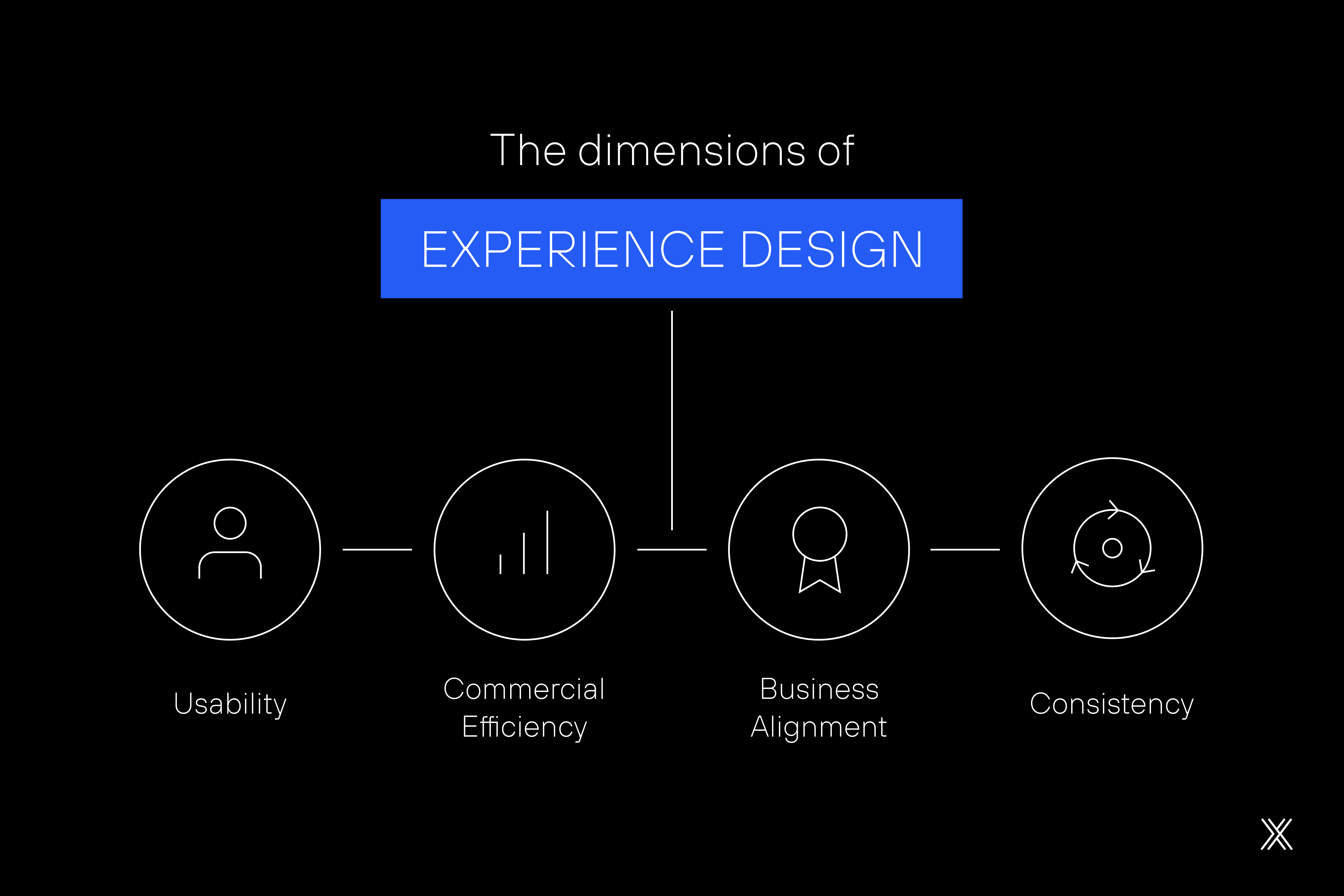
Experience design is not aesthetics. It is decision architecture, guiding users, reducing friction, and connecting intent to action.
UX, UI, visual hierarchy, clear flows, and consistency across pages must reflect the core business, the user profile, and the stage of the journey. When design ignores these factors, visually appealing but inefficient interfaces emerge, which are difficult to navigate, confusing, and have low conversion rates.
A well-structured experience design addresses two critical points at the same time: it improves usability and increases the commercial efficiency of the website company.
4. Technical SEO as part of the structure
Technical SEO does not start after the website is live. It is built together with the architecture, through clear URLs, logical page hierarchy, and organized content structures.
Well-configured sitemaps, consistent semantic structure, and indexation control prevent a common mistake: trying to fix SEO when the website is already online, with a foundation that does not scale.
This requirement reduces rework, improves organic rankings, and ensures that content growth does not compromise performance or indexation.
5. Performance and Mobile-First experience
Today, mobile is the main point of contact. Designing for desktop first and adapting later compromises both experience and results.
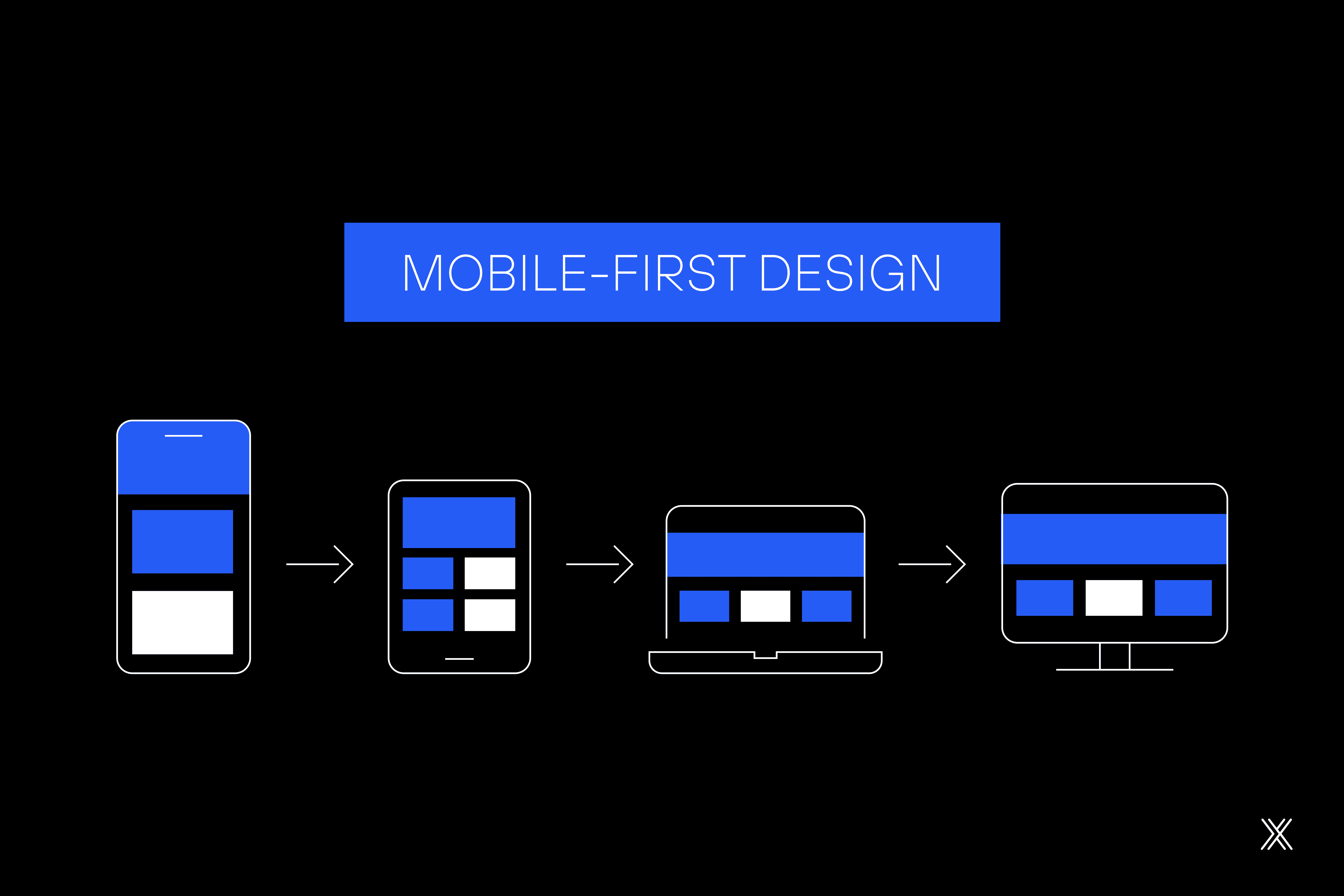
Performance must be treated as a structural requirement. Metrics such as Core Web Vitals directly impact SEO, conversion, and perceived quality. Slow websites increase bounce rates, reduce time on site, and lose competitiveness in search engines.
When performance and mobile-first are priorities from the beginning, the website company remains fast, consistent, and ready to scale.
6. Content structure, brand, CTAs, and website types
A professional website company organizes content, positioning, and decision-making. The structure must clearly communicate who the brand is, what problem it solves, and how it guides users through the journey.
In institutional projects, this starts with well-defined essential pages such as Home, About, Solutions or Services, and Contact. Each page must sustain a consistent tone of voice, a clear value proposition, and a narrative aligned with the company's positioning, otherwise navigation loses efficiency and perceived value weakens.
In high-complexity website company projects, with a large volume of pages, content, and navigation levels, such as product portals, technical catalogs, or platforms with multiple lines and variations, content strategy becomes structural. Architecture must organize categories, subcategories, filters, detail pages, editorial content, and conversion points in a coherent and scalable way, maintaining brand consistency and message clarity throughout the experience.
In this context, CTAs are part of the content strategy. They are distributed throughout the journey, considering the context of each page and the user's level of maturity. When this logic is not defined at the architectural level, the result is an informative and complete website company, but with low ability to guide users toward actions aligned with business objectives.
7. Maintenance, security, and content as a continuous operation
Publishing a website marks the beginning of the operation, not the end of the project. Continuous maintenance prevents obsolescence, technical failures, and the accumulation of technical debt. Core updates, libraries and dependencies, versioned backups, and monitoring must be part of the routine.
Security must be treated as an ongoing process, not a one-time checklist. Vulnerability fixes, access control, permission policies, and monitoring reduce the risk of breaches, data leaks, and downtime.
Content acts as a long-term acquisition asset. It sustains SEO over time, expands semantic coverage, and maintains relevance in search engines. Without continuous updates, a website company loses traction and stops generating qualified traffic.
KPIs for a successful Website Company
Website company projects are evaluated by their ability to sustain results over time. KPIs must reflect acquisition, experience, operational efficiency, and capacity for evolution, not just campaign metrics.
KPIs for performance, experience, and acquisition
These indicators show how the website company behaves for users and how it contributes to generating qualified demand.
Load time and Core Web Vitals: Performance directly impacts experience, SEO, and conversion. Metrics such as LCP, CLS, and INP indicate whether the website is fast, stable, and responsive across devices.
Conversion rate per page: Conversion goes beyond sales and includes forms, contact requests, quote requests, downloads, and sign-ups. Measuring by page helps identify where the website acts as a funnel and where it only informs.
Bounce rate and engagement metrics: Quick exits indicate misalignment between expectations and content. Time on page, scroll depth, and clicks help assess clarity, relevance, and usability.
Qualified organic traffic: Volume alone does not sustain results. The focus is on attracting users with real intent, supported by technical SEO, information architecture, and content aligned with correct searches.
Growth of ranked keywords: The gradual expansion of the keyword base and improved positions indicate consistent authority growth and long-term website health.
KPIs for operations, governance, and technical evolution
These indicators evaluate the website company as an operational platform, considering IT, security, and scalability.
Ease of maintenance and evolution: When small changes require complex projects, the website becomes a bottleneck.
Stability and availability: Downtime and recurring errors affect trust, SEO, and operations.
Security and access management: Permission control and reduced incidents indicate governance maturity.
Integration capability: Ease of integrating marketing tools, analytics, CRM, and internal systems shows readiness for evolution.
Operational cost over time: Well-structured websites reduce rework, technical dependency, and maintenance costs in the medium and long term.
How to choose the right partner when building a website
What ensures success in website company development is method, strategic vision, and consistent delivery. A strong partner understands the business before the technology, translating objectives into architecture, content, and conversion.
A reliable partner:
Understands business goals before proposing technology.
Masters technical SEO, performance, and security.
Works with clear planning and methodology.
Focuses on continuous evolution, not just launch.
Presents case studies with measurable results.
Want to talk about your project and understand which approach makes the most sense for your scenario? Talk to Dexa and discover how to structure a professional website company with a solid technical foundation, strategic vision, and focus on results.


