How to Create a Brand Book That Aligns Strategy, Communication, and Business Goals
Strategic Branding

A brand can have a logo, color palette, typography, and dozens of pages explaining application rules. Even so, each team may apply that identity differently.
The problem arises when a brand book documents elements without guiding decisions. Teams can find the color codes but may not know how to adapt the identity to a campaign. The brand voice may be described as approachable and innovative, yet lack clear criteria for turning those attributes into copy. In digital environments, new components may be created without a shared reference.
A useful brand book needs to support teams in their day-to-day work. This requires a strategic foundation, clear visual and verbal guidelines, examples based on real situations, and a structure designed to evolve.
Throughout this article, you will learn how to create a brand book that translates strategy into visual, verbal, and digital guidelines, supports teams across different contexts, and stays current as the company evolves.
Build a consistent brand across every channel
Connect strategy, visual identity, and language through clear guidelines for teams, partners, and vendors.
Why brand books lose relevance in day-to-day work
A brand book often receives the most attention when a new identity is launched. Teams learn the rules, files are organized, and the first applications are closely reviewed. Over time, new channels, products, and formats emerge that the original document did not anticipate.
Questions start being resolved outside the brand book. One professional adapts the color palette for a campaign, another creates a standard for social media, and a vendor interprets the photography style independently. Without clear criteria or sufficient examples, each isolated solution introduces another possible way to apply the brand.
The format itself can widen this gap. When the file is difficult to find, outdated, or requires extensive reading to answer a simple question, consulting the brand book is no longer the fastest option.
Gradually, different versions of the identity begin to coexist. The brand retains its main elements but loses coherence in how they appear and work together across each touchpoint.

Are brand books, brand guidelines, and brand style guides the same thing?
The terms brand book, brand guidelines, and brand style guide are often used interchangeably. They all describe a document or reference platform that organizes how a brand identity should be expressed and helps teams, partners, and vendors apply it consistently.
The level of detail may vary. Some companies use a brand book to bring together strategy, positioning, personality, and history. The terms brand guidelines and brand style guide may refer to visual, verbal, and operational instructions. Other organizations combine all these layers within a single system.
These distinctions are not universal. The content and usefulness of the material matter more than the name. The system needs to explain what must remain consistent, what can change, and which criteria should guide situations that have not yet been anticipated.
A robust brand book connects strategy to application. It brings together brand foundations and positioning, visual identity, brand voice and tone, channel-specific guidance, correct and incorrect usage examples, and a governance structure. The level of detail required for each layer depends on the complexity of the company and the people who will use the guidelines.
Strategy sets the rules that follow
A visual identity makes a brand recognizable, but it needs to represent a strategy. Without that foundation, the logo, colors, and typography become an aesthetic system without clear decision-making criteria.
Strategy needs to come first because it guides hundreds of future decisions. The clearer its foundations are, the less subjective communication, design, and product choices become.
Before defining applications, the brand book should document the brand’s foundations:
Purpose;
Positioning;
Value proposition;
Priority audiences;
Personality traits;
Differentiators;
Principles;
Market context.
To guide decisions, these foundations need to be translated into observable criteria. Recognition, differentiation, relevance to priority audiences, accessibility, and feasibility help teams evaluate each visual or verbal decision. The priority assigned to these criteria should reflect the brand’s positioning and actual conditions of use.
Strategy also helps teams evaluate new demands. A team may need to create a format that does not yet appear in the brand book. When the principles are clear, it can develop a suitable solution without losing consistency.



What to include in visual identity guidelines
The visual system brings together the elements responsible for a brand’s graphic expression. The guidelines should explain which elements can change and which must remain consistent, ensuring that every adaptation is still recognizable as part of the same brand.
Logo and lockups
The brand book should present the primary logo, its variations, and the criteria for selecting each version. Clear space, minimum size, proportions, and applications across different backgrounds help prevent reproduction errors.
Incorrect uses should also be included. Distortions, color changes, effects, outlines, and unsuitable combinations are easier to identify when the guidelines provide visual examples.
Color palette
The color palette should include the codes required for digital and print applications, such as HEX, RGB, CMYK, and Pantone, when applicable.
The guidelines should also define the function of each color. Which colors are primary? Which ones should be used as accents? Which combinations preserve contrast and readability? A list of color codes does not answer these questions.
For brands with a significant digital presence, the guidelines should incorporate the accessibility criteria established by the Web Content Accessibility Guidelines (WCAG). At Level AA, the minimum contrast criterion establishes a ratio of 4.5:1 for standard text and 3:1 for large text.
Typography
Typography guidelines can establish type families, weights, hierarchies, spacing, and fallback options for environments where the primary typeface is unavailable.
In digital environments, typography needs to account for different screen sizes, display densities, and reading conditions. A composition that works in a presentation may not remain as legible on a mobile device.
The WCAG guidelines also require text to be resizable up to 200% without loss of content or functionality. This requires typography decisions that support different browsing and accessibility needs.
Grid, composition, and spacing
Logo, colors, and typography do not define how elements should relate to one another. The brand book can also establish grids, alignments, margins, spacing scales, visual density, and proportions between text and imagery.
In digital products, these values can be documented through design tokens and components. For campaigns, presentations, and editorial materials, composition examples across different formats show how the identity can adapt without losing recognition.
Photography, illustration, and iconography
These elements directly influence how the brand is perceived. Expressions such as modern imagery or people-centered photography provide little practical guidance.
The brand book can define framing, lighting, composition, color treatment, the presence of people, the level of abstraction, and situations to avoid. For icons and illustrations, the guidelines may establish line weight, proportions, fills, and construction style.
The more clearly these criteria are demonstrated visually, the less room there is for conflicting interpretations.
Brand voice needs to work in every context
Terms such as human, approachable, and confident help describe a brand, but they still leave room for interpretation. One writer may associate approachability with slang, while another may choose a warmer, more explanatory style. Both believe they are following the same guidance.
The brand book needs to translate these attributes into specific writing choices. A confident voice communicates expertise without exaggerating results. An approachable voice speaks directly to the reader without forcing familiarity. A clear and educational voice explains technical concepts without assuming that the audience already understands every acronym.
Brand voice, tone of voice, archetypes, and storytelling
Brand voice represents the brand’s relatively stable personality. The brand’s tone of voice describes how that voice adapts to the channel, audience, and situation. The personality remains recognizable, while the intensity, vocabulary, and level of formality may change.
Brand archetypes can help organize personality traits when they are translated into observable language choices. Vocabulary, sentence length, level of formality, use of humor, preferred terms, and expressions to avoid provide clearer guidance than an archetype alone.
Brand storytelling complements this structure by defining the themes, perspectives, and narratives the brand can develop. The guidelines can indicate which stories reinforce the positioning, what role the company assumes, and which types of evidence make its communication credible, without imposing a single script across every channel.
These criteria vary in intensity according to the channel. An article allows the brand to provide context and develop an argument. An interface needs to communicate the next action in a few words. When responding to a complaint, the brand should acknowledge the problem and explain what will be done. A commercial proposal requires objectivity, confidence, and clarity about the limits of the engagement.
Comparative examples make these differences visible. They show how the brand voice works across headlines, error messages, emails, educational content, and sales conversations. This helps teams preserve the brand’s personality without making every piece of content sound the same.
The same voice in an error message
Version | Message |
Before | “Oops! It looks like something went wrong 😕 Please try again later.” |
After | “We couldn’t complete your submission. Try again in a few minutes. If the problem continues, contact our team.” |
Brand guidelines also need to work across digital experiences
Websites, applications, and platforms require decisions that a traditional visual guide may not cover. The brand needs to remain recognizable when users navigate a page, complete a form, receive a confirmation, or encounter an error.
Digital brand guidelines may include:
User interface components;
Information hierarchy;
Button and link behavior;
Form fields and validation;
Error, success, and guidance messages;
Animations and transitions;
Responsive behavior;
Accessibility criteria;
Content patterns for user interfaces.
The appropriate level of detail depends on the number of products, teams, platforms, and variations that need to share the same identity. When these decisions are reused frequently, they can be organized within a Design System shared by design and development teams. Design tokens document recurring values such as colors, typography, spacing, and motion, while components define structures, states, and behaviors.
This structure reduces repeated decisions and allows teams to create new interfaces with greater consistency. The verbal identity should also be part of the documentation, providing guidance for buttons, menus, alerts, and support messages.
Brand perception is shaped by the entire experience. Form, content, and behavior need to follow the same logic.
Bring your brand identity into digital experiences
Turn visual and verbal guidelines into consistent, accessible digital experiences built to scale.
How to maintain consistency across teams, markets, and channels
Brands operating across different markets need to remain recognizable without communicating every message in exactly the same way. Elements such as positioning, logo proportions, and brand voice principles may remain consistent. Vocabulary, imagery, offers, cultural references, and formats need room for adaptation.
The brand book should distinguish between fixed elements, flexible elements, and local decisions that require approval. Different markets may also require adjustments based on language, cultural context, accessibility, legal requirements, and channel-specific behaviors.
In verbal communication, localization needs to preserve the effect and intent of the message. An expression that sounds approachable in one country may feel overly informal in another. In visual identity, photography, colors, and symbols may also carry different meanings depending on the cultural context.
Clear criteria give local teams and partners the autonomy to adapt the brand while preserving its connection to the global strategy.
Usage examples reduce room for interpretation
A rule becomes more useful when it is applied to a recognizable situation. Correct and incorrect examples should not be limited to logo usage. In visual identity guidelines, they can demonstrate color combinations, photography treatments, hierarchies, and compositions. In verbal identity guidelines, they can compare headlines, calls to action, technical explanations, and responses. In digital experiences, they can present components across different screens and states.
The examples should also reflect the materials teams actually produce. If the company frequently creates presentations, landing pages, proposals, and campaigns, these formats should appear in the system.
The goal is not to build a library capable of anticipating every demand. It is to reveal the reasoning behind each decision. When professionals understand the criteria, they can apply them to a new format without depending on a specific rule for every detail.
Brand guidelines that illustrate different approaches
Publicly available resources show how the structure of brand guidelines changes according to each brand’s priorities and channels:
The Dropbox Brand Guidelines connect logo, colors, typography, icons, illustration, motion, and language within the same system;
The Mailchimp Content Style Guide focuses on writing principles, brand voice, and tone adjustments across different situations, teams, and channels;
The Atlassian Design System brings together visual foundations, components, and content standards for user interfaces and digital experiences.
These resources provide useful references for structure and depth. Each company still needs to define its guidelines based on its own strategy, audiences, and the situations its teams encounter.
Which formats work best for a brand book?
A brand book can be organized in different formats. The right choice depends on the volume of guidelines, update frequency, number of users, and the level of control required over access, versions, and files.
A PDF works well for brands with few applications, centralized teams, and guidelines that rarely change. It is easy to share and can be accessed without an internet connection. As the content grows, finding information and ensuring that everyone uses the latest version becomes more difficult.
Documentation hub
A documentation hub, such as an intranet or corporate wiki, allows teams to organize guidelines by task, use search tools, and update individual sections without redistributing the entire file. This format works well when different departments consult the material and the guidelines change regularly.
Brand portal
A brand portal is a dedicated environment for official brand guidelines and assets. It can provide access profiles, version histories, download rules, and integration with a Digital Asset Management (DAM) system. This format is suitable for companies with multiple brands, business units, vendors, or a high volume of materials.
Documentation integrated with a Design System
For brands with digital products, a Design System turns brand guidelines into reusable components and patterns. Colors, typography, spacing, behaviors, and language guidelines are documented and can be connected to code. This reduces inconsistencies between design and development and helps maintain the brand identity throughout the digital experience.
The formats can be combined. A company may provide vendors with a concise PDF, maintain a brand portal as its official source, and use a Design System with product teams. The key is to maintain one reliable source and organize the content around the needs of the people who use the guidelines.
Governance keeps brand books up to date
When no one knows who can change a guideline, different versions of the brand book begin to circulate. Marketing consults one file, vendors receive another, and the product team creates solutions for situations that have not yet been documented.
Preventing this fragmentation requires clear responsibilities. A person or team needs to maintain the official version, review update requests, and communicate changes to the relevant departments. Exceptions should follow the same process so that an isolated decision does not become a new standard without proper evaluation.
Reviews can take place at defined intervals or be prompted by changes within the company, such as a product launch, expansion into a new market, or the creation of a new digital channel. If several teams repeatedly ask the same question, the problem is probably with the guidance, not with the people consulting it.
Short training sessions and a dedicated channel for questions help identify these gaps. With this continuous oversight, the brand book can incorporate new insights and remain a reliable resource for internal teams and vendors.

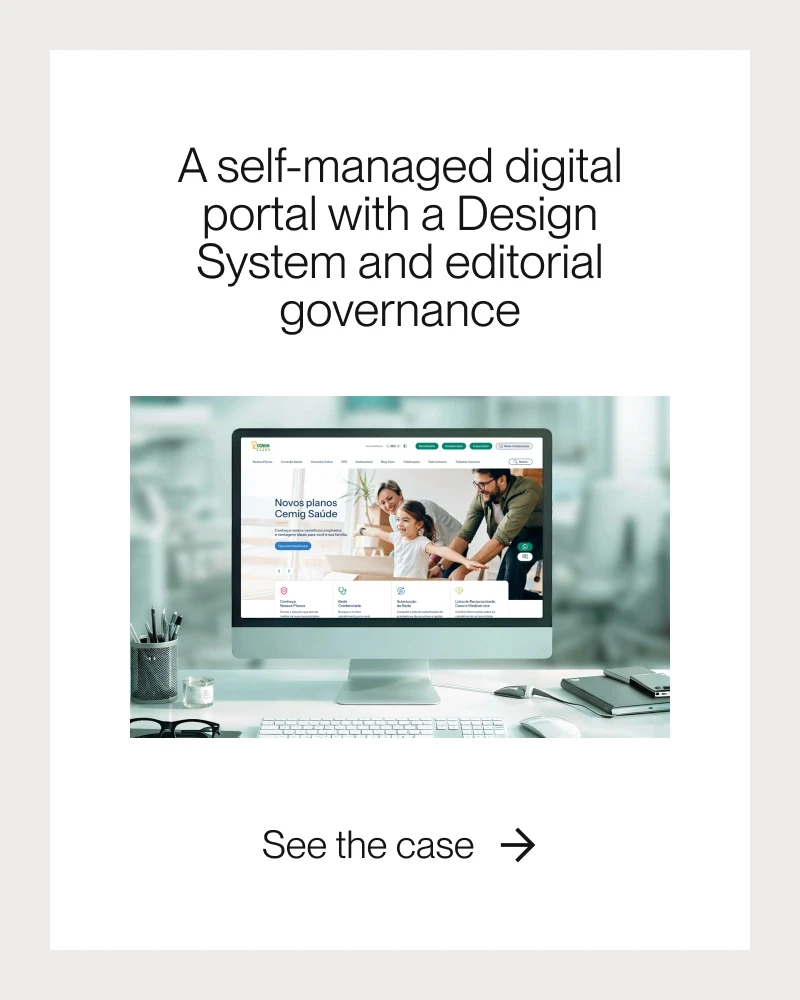

How Dexa turns guidelines into actionable systems
Dexa approaches branding as a system that connects strategy, visual identity, language, and digital experience.
The process begins with an understanding of the business, its audiences, and its touchpoints. This foundation guides the development of visual and verbal elements, defines criteria for digital environments, and organizes the guidelines around the needs of each team.
Depending on the project, the work may include:
Brand strategy and positioning;
Visual identity;
Brand voice and tone of voice;
Applications across different channels;
User interface components;
Design System;
Digital documentation;
Governance structure.
The outcome needs to support decision-making. This means providing clear guidance for the people who create campaigns, write content, develop interfaces, prepare proposals, or represent the company in other situations.
“In projects involving different teams and vendors, one of the first decisions is to identify which questions repeatedly arise during production. If teams frequently consult the same rules, the problem is not with the people. It is with how the knowledge has been organized. A strong brand book reflects how the brand is actually used, rather than following a purely theoretical structure,” says Rafael Andrighetti, Head of Design at Dexa.
A brand book protects the entire brand system. It reduces uncertainty, speeds up decisions, and ensures that the company’s strategy remains recognizable as the organization grows.
Create guidelines that evolve with your brand
Dexa connects strategy, design, content, and technology to create identities that work across different teams, channels, and experiences.


