
The role of the corporate website has evolved. In recent years, it has become one of the main points of contact between the brand and its potential clients and, increasingly, one of the primary drivers of lead generation, sales, and business growth. However, many companies still view their websites primarily as institutional assets, when, in fact, they can (and have great potential to) be a strategic conversion channel.
This is the essence of a high-converting website: a digital hub that combines user experience, targeted content, results-oriented design, and advanced technology, to turn visitors into customers.
But what actually makes a website high-converting? And how can you transform your website into an active channel for lead generation and business opportunities? That's exactly what we'll explore in this guide.
What is a High-Converting Website?
A high-conversion website is one developed with a focus on measurable results, not just aesthetics. It’s designed so that each page plays a strategic role in the customer journey, from the home page to sections like "About," "Services," and "Contact."
Studies show that conversion-focused websites can significantly increase lead generation rates compared to institutional pages without strategic CTAs. This is possible because they combine branding (strengthening market positioning) with performance-driven strategies focused on lead generation and conversion.
In practice, this means visitors can easily find relevant content, intuitive navigation, well-positioned offers, and ease to take action, whether by getting in touch, requesting a quote, or downloading exclusive material.
Also read: Before hiring: 10 characteristics of a good web company
What is the difference between an institutional website and a high-converting website?
Although both website types share many technical and visual elements, their goals are different. An institutional website is primarily designed to present the company, its services, history, and differentiators to the market. A high-conversion website, on the other hand, is strategically built to turn visitors into business opportunities, guiding users through a results-driven journey.
This means every page is developed with user experience, information architecture, strategic CTA placement, content production, and performance measurement in mind.
The focus is on generating results
While many institutional websites function primarily as a digital presence, a high-conversion website actively supports lead generation and business growth.
Every navigation element is designed to simplify decision-making and encourage actions that move visitors closer to becoming customers, whether through quote requests, consultations, downloads, or contact forms.
User journey shapes the website structure
In a conversion-focused website, content, navigation, and touchpoints are organized around the needs and expectations of users at different stages of their journey.
This approach helps visitors find relevant information more efficiently, reducing friction and increasing the likelihood of conversion.
Branding and performance work together
Another key differentiator is the integration between brand positioning and business objectives. In addition to strengthening brand perception, the website must contribute to opportunity generation and business growth.
When branding, user experience, technology, and marketing are planned together, the website becomes a powerful tool for generating opportunities, strengthening brand equity, and supporting long-term business objectives.
Website speed directly impacts conversions
User experience begins before navigation itself. The time required for a page to load directly influences how users perceive a website’s quality, credibility, and efficiency.
When loading times exceed expectations, abandonment rates increase, especially on mobile devices and in situations where users are looking for quick answers to a specific need.
Performance influences user behavior and results
Website speed affects several key performance indicators, including bounce rate, time on site, pages per session, and conversion rates.
In addition to improving user experience, faster websites contribute to stronger organic search performance and increase the ability to attract qualified traffic.
Performance should be considered from the start
Website speed depends on multiple factors. Code quality, image optimization, hosting infrastructure, information architecture, and development practices all influence overall performance.
For this reason, performance optimization should be considered from the earliest stages of a project, creating a strong foundation for sustainable growth and long-term business results.
Choosing the right domain for your business
A high-conversion website starts with the domain, which is the brand’s digital gateway and one of the factors that directly impact credibility, SEO, and user trust. A good domain should be short, easy to remember, intuitive, and aligned with the company’s name or the business’s main keyword, making it easier for visitors to immediately associate the address with what the brand offers. Domains with numbers, hyphens, or complex combinations should be avoided, as they complicate verbal sharing and increase typing errors.
For companies seeking to strengthen their digital presence, including strategic keywords in the domain can boost organic ranking, as long as this practice does not compromise the brand’s naturalness and strength.
In the table below, we gathered some basic examples of good and bad domains:
Type | Example | Why it works (or not) |
Good domain | booking.com | Short, direct, easy to remember, and self-explanatory. |
Good domain | netshoes.com.br | Joins brand strength with the business niche. |
Bad domain | minhaempresa-online123.com | Long, not very memorable, unnecessary numbers and hyphens. |
Bad domain | ofertasimperdiveisparavoce.net | Too long, hard to type, little brand authority. |
How to Build a High-Converting Website
Start with a clear strategy
Before focusing on design, it is necessary to understand who the target audience is, what the site’s objectives are, and the journeys the visitor must follow. This stage should unite marketing, technology, and design teams, potentially involving frameworks like Design Thinking.
Best practice: working with multidisciplinary teams and understanding the target audience’s expectations significantly increase site engagement.
Create an exceptional user experience
Investing in User Experience (UX) goes far beyond aesthetics and plays a strategic role in driving business growth. According to Forrester Research, every dollar invested in UX can generate up to $ 100 in return, highlighting the importance of this aspect for digital success.
A strong user experience relies on three essential elements:
Intuitive navigation: A site with a clear structure, simplified menus, and logical flow eliminates barriers and confusion. This facilitates visitors quickly finding what they are looking for and advancing without obstacles, significantly increasing conversion chances.
Optimized loading speed: Google data shows that 53% of users abandon pages that take more than 3 seconds to load. Slow sites frustrate users and harm search engine positioning. Optimizing images, using efficient hosting, and applying modern development techniques are fundamental steps to keep the site agile.
Responsive design for mobile devices: With more than half of global traffic coming from smartphones and tablets, ensuring the site is fully functional and visually attractive on smaller screens is indispensable. Responsive design improves usability, reduces bounce rates, and broadens conversion opportunities on any device. Ensuring a fluid, fast user experience adapted to various browsing contexts is the foundation for turning visitors into loyal customers.
Deepen your knowledge: Why Inclusive Design is urgent
Guide the user to take action
CTAs (Call-to-Actions) are indispensable elements to turn visitors into leads and customers because they guide the user to the next step in the purchase journey. Without clear and strategic CTAs, even a well-designed site can fail to generate conversions. They act as bridges between visitor interest and the desired action, whether filling a form, requesting a quote, or making a purchase.
A study by Sixth City Marketing points out that optimized CTA buttons can increase conversion rates by over 80%, showing their direct impact on results.
Best practices for effective CTAs:
Be clear and direct: Use action verbs like Request, Subscribe, Start.
Canva: Create your design now. A direct and simple invitation that clearly communicates what the user will do.Create urgency: Phrases like Secure now or Last spots encourage immediate action.
Sephora: Get your free sample. A trigger of urgency and reward that motivates quick conversion.Create visual emphasis: Use contrasting colors that catch attention without polluting the design.
Domino's Pizza: Order in 2 clicks. Besides the vibrant button color, the text reinforces speed, attracting immediate attention.Maintain consistency: Align the CTA tone with the visual identity and language of the site.
Coursera: Start learning for free. The CTA reflects the platform’s value proposition and maintains coherence with its educational communication.Place it in the right spot: Position CTAs in high-visibility areas (above the fold, at the end of strategic sections).
Booking.com: Check availability. Strategically positioned near filters and search results, facilitating immediate decision-making.
Well-designed forms reduce conversion friction
After clicking a CTA, visitors need to complete an action. At this stage, forms become one of the most important elements of a high-conversion website.
Forms that are overly long, complex, or request unnecessary information can increase abandonment rates and reduce lead generation. Conversely, concise and contextually relevant forms create a smoother user experience.
Ask only for essential information
Every additional field represents additional effort for the user. The goal is to balance lead qualification requirements with simplicity and usability.
In many situations, requesting only essential information during the first interaction can increase conversion rates and facilitate the beginning of the customer relationship.
Context influences form completion
Not every page has the same conversion potential. Users consuming educational content behave differently from those actively evaluating vendors or requesting proposals.
For this reason, forms should align with the visitor's stage in the journey and the value of the offer being presented.
Integrated forms strengthen opportunity generation
Forms can do much more than capture contact information. When integrated with CRM and marketing automation platforms, they help organize follow-up processes, qualify leads, and improve the efficiency of sales and marketing teams.
Integrate SEO and inbound marketing
A high-conversion website is discovered organically, which is only possible when it applies Search Engine Optimization (SEO) techniques. To achieve this, it's essential to focus on website performance (Technical SEO), keywords and readability (On-Page SEO), and links to your site from other websites (Off-Page SEO).
Sites that produce content based on strategic terms attract more qualified visitors. However, it is necessary to understand the intent behind the search: whether users are exploring a problem, comparing options, or ready to contract.
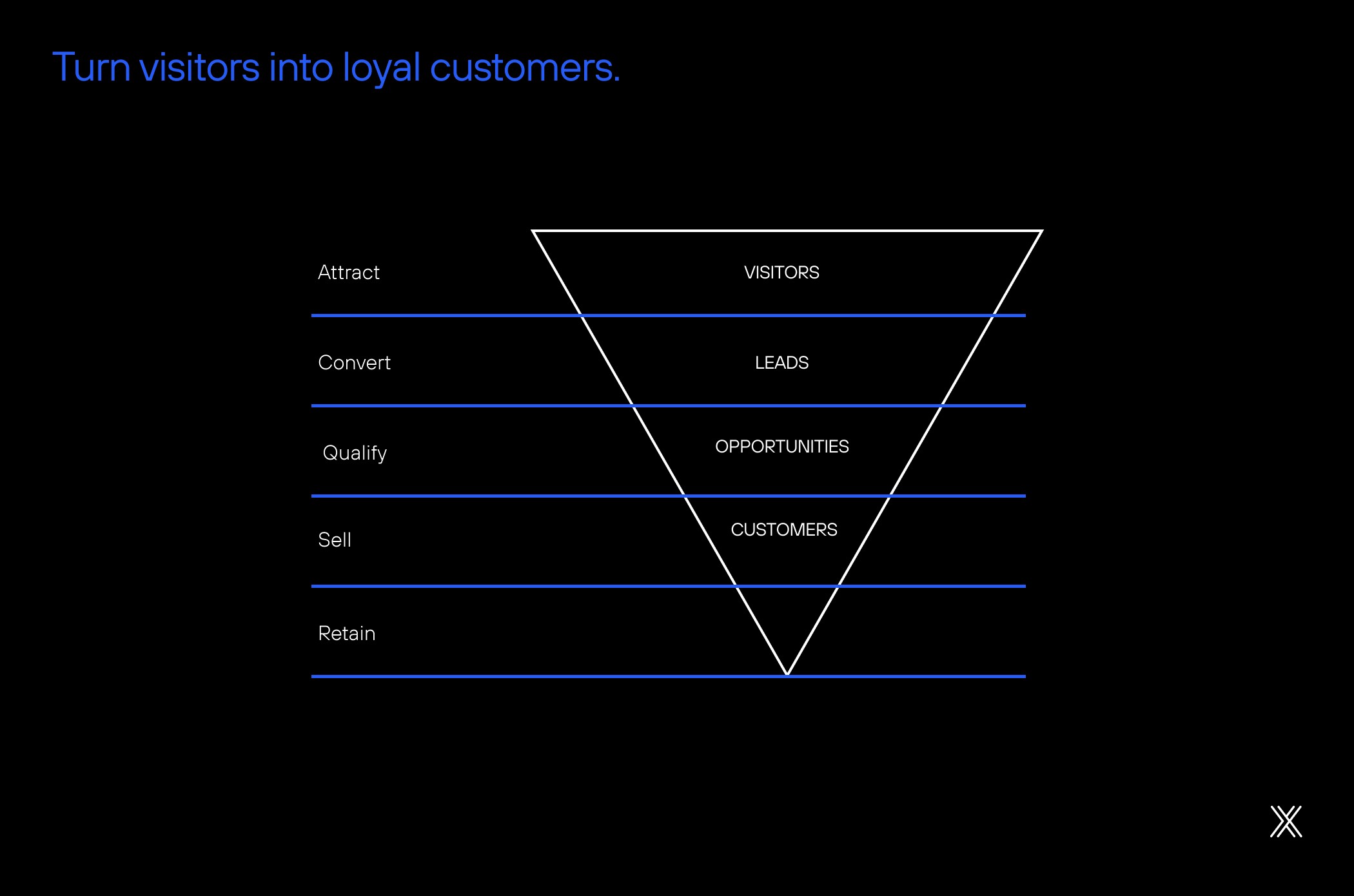
For example, in the tourism sector, a visitor at the top of the funnel might search for "best family travel destinations, "while someone closer to the decision will search for "all-inclusive package for Cancun in September." By mapping these journeys and aligning the content to corresponding keywords, the site becomes a magnet for qualified leads, connecting SEO directly to inbound marketing strategies.
Use data to continually improve
Tools like Google Analytics, Hotjar, and VWO can be used to monitor behavior, identify bottlenecks, and continuously adjust pages to increase conversion rates. Google Analytics provides essential quantitative metrics like traffic source, page behavior, and goal completion. Hotjar complements this view with heat maps, session recordings, and surveys revealing how users visually interact with the site.
VWO is an advanced optimization and experimentation platform: it allows A/B, multivariate testing, user segmentation, funnel analysis, and content personalization, all with intuitive visual editors and reports including Bayesian statistics in real time. With VWO, it is possible to test hypotheses, compare different versions of pages or elements, and identify approaches that truly increase conversions.
Practical tip: Combine Google Analytics goals (such as button clicks or form submissions), Hotjar’s visual insights, and VWO’s A/B tests and personalizations. This combination helps identify where users abandon pages, which elements perform best, and make decisions effectively, minimizing risks and maximizing results.
How to measure the performance of a high-conversion website
Building a conversion-focused website is only the first step. To understand whether the strategy is working, it is essential to track key indicators that reveal user behavior and the effectiveness of the actions implemented.
Continuous analysis helps identify opportunities for improvement, eliminate friction points in the user journey, and understand which elements contribute most to lead generation and business growth.
Conversion rate
Conversion rate measures the percentage of visitors who complete a desired action on the website, such as filling out a form, requesting a quote, downloading content, or contacting the company.
This metric helps determine whether the traffic reaching the website is translating into meaningful business opportunities.
Qualified lead generation
Beyond the number of leads generated, it is important to evaluate lead quality. A high-conversion website should attract visitors who match the company’s ideal customer profile and have a genuine interest in its products or services.
Analyzing lead quality helps determine whether content, CTAs, and website pages are attracting the right audience and supporting business objectives.
Bounce rate and navigation behavior
Metrics such as bounce rate, pages per session, and time on site provide valuable insights into how users interact with the website.
Although these indicators do not directly measure conversions, they reveal important information about content relevance, usability, and user engagement throughout the customer journey.
Continuous monitoring of these metrics allows teams to make data-driven improvements, optimize the user experience, and steadily increase website performance over time.
What is CRO and why is it important for a high-conversion website?
A high-conversion website is not created only during the initial development phase. Continuous improvement depends on ongoing analysis, testing, and optimization based on real user behavior.
This is where Conversion Rate Optimization (CRO) becomes essential. CRO is a methodology focused on identifying improvement opportunities and increasing a website’s ability to convert visitors into leads and customers.
Rather than relying solely on traffic growth, CRO focuses on maximizing the value of existing traffic by creating more efficient user journeys and removing barriers to conversion.
Testing reveals optimization opportunities
Small changes can lead to meaningful improvements in performance. Adjustments to headlines, CTAs, forms, visual elements, and content structure can significantly influence user behavior.
Organizations that embrace a testing culture make decisions based on evidence rather than assumptions, increasing predictability and reducing risk.
Continuous optimization follows user behavior
User expectations constantly evolve. New devices, browsing habits, and purchasing behaviors influence how people interact with digital experiences.
By monitoring performance indicators and implementing regular optimizations, websites remain aligned with audience needs and continue generating business opportunities over time.
Visual identity: the foundation for conversions
A strong visual identity plays a critical role in how a website is perceived by its audience. Colors, typography, images, and graphic elements are important aesthetic resources because they communicate values, generate recognition, and create emotional connections with the audience.
A study by Lucidpress revealed that brands with consistent visual identity can increase their revenue by up to 33%, precisely because they convey trust and strengthen the user experience. This means that in a high-conversion website, the visual identity must be meticulously planned to reinforce the message at every stage of the journey, from the first impression to the final decision. Coherent design, visual clarity, and element harmony increase time on site, reduce bounce rates, and enhance user actions, turning visitors into qualified leads.
Below are examples of how leading brands apply key visual identity principles to strengthen digital presence and increase conversions.
Strategic colors
Coca-Cola: Consistent use of red that transmits energy, passion, and urgency, strengthening the brand globally.Coherent typography
The New York Times: Classic and elegant typography reinforces the publication’s authority and tradition.Visual consistency
Apple: Maintains the same minimalist standard on all pages, products, and digital communications, creating a smooth experience.Authentic and quality images
National Geographic: Uses original and impactful photos that convey credibility and deeply engage the audience.Visual hierarchy and spacing
Slack: Bets on a design with a great information hierarchy, well-distributed white spaces, and clear CTAs that guide users naturally towards action.
A high-converting website is more than landing pages and blog content
When discussing conversion, it’s common for companies to focus their efforts only on landing pages or blog articles. Although these play fundamental roles within an inbound marketing strategy, limiting the focus to them is a strategic mistake.
All website pages must be well thought out and built to:
Explain who the company is;
Highlight which products or services it sells;
Generate conversions.
After all, excellent content or a highly strategic landing page means little if, continuing the journey within the website, the user gets confused, cannot complete tasks, and loses interest in the brand.
A well-structured institutional website:
Serves as the foundation of the company’s digital presence: According to Think With Google, more than half of B2B purchase journeys start on an institutional website;
Works as both a showcase and a funnel: While reinforcing brand identity, it leads users to actions that generate opportunities;
Increases trust and authority: Studies show that 75% of users judge a company’s credibility by the site’s design.
In other words, the site has ceased being merely a destination to become a bridge between branding and conversion, integrating different digital strategies and strengthening the entire marketing and sales ecosystem.
Why should integrated website construction start with the first step?
Despite the evolution of the corporate website’s role, many companies still treat its development as isolated and sequential steps: first design, then development, and finally marketing actions. This fragmented approach no longer works in today’s digital context, where speed, synergy, and results focus are essential.
Creating a high-conversion website requires full and collaborative integration from the start. Designers, developers, and marketing strategists must work together from the project conception to ensure every element is designed to generate real business impact. This synergy enhances user experience, maximizes performance, reduces rework, and accelerates delivery time.
At Dexa, this methodology is the basis of every project. By combining creativity, technology, and data from the very first meeting, we build websites that operate as intelligent conversion machines, aligned with companies’ commercial strategies.
Is your website really ready to convert?
If your website is not generating qualified leads or contributing to business growth, it is not fulfilling its fundamental role as an active channel for growth and relationship.
At Dexa, we help our clients reach this level with personalized solutions that combine cutting-edge technology, conversion-focused design, and integrated marketing strategies.
Want to take your site to the next level and turn visitors into loyal customers? Talk to our specialists.
FAQ: Frequently Asked Questions about High-Converting Websites
1. What exactly is a high-conversion website?
2. What is the difference between an institutional website and a high-conversion website?
3. What elements are essential to increase my website’s conversion rate?
4. How does SEO help increase conversion on my website?
5. Is it necessary to invest in design to increase conversion?
6. Can I use any type of CTA on my website?
7. How long does it take to see results after implementing a high-conversion website?
8. What is the importance of integrating marketing, design, and technology in website development?
9. Do tools like Google Analytics and Hotjar really help improve conversion?
10. What is considered a good conversion rate for a website?
11. Are landing pages and high-converting websites the same thing?
12. What is CRO?
13. How can I increase the conversion rate of an existing website?
14. How many fields should a form have?